


Despite the reduction in deer herds this year, deer grazing still substantially threatens your trees and landscaping. Deer damage to ornamental shrubbery and landscaping is projected to exceed $500 million this winter. Deer graze in neighborhoods during the winter when natural plants are scarce, and bucks also rub their antlers against the bark of trees, damaging or killing them. Even if you have just a few deer that regularly travel through your property, each deer requires 3% of their body weight in food per day to survive. That amounts to between 5 and 10 lbs of green foliage per deer per day. Considering the weight of tender leaves, buds, and spring flowers in your yard, a small herd can completely devastate your landscape gardening.
Deer Repellant Sprays
Non-invasive solutions such as sprays containing capsicum or hot pepper, raw egg, garlic urine, and other ingredients have been popular because spraying is the least invasive. Not only are these sprays expensive ($20 to $30 per gallon), but the spray must be reapplied every few weeks and after rain or snow falls to remain effective. If you miss an application, you may be surprised to find your arborvitae bushes gone. Dial soap also has a smell that repels deer. You can drill a hole in the soap bar and hang it with a fishing string. These smell-based deterrents are usually less effective as the winter progresses because deer become hungrier as the food supply is covered with snow or is depleted.
Deer Sound and Motion Detectors
Other solutions, like ultrasonic sound waves and motion-detecting lights, are completely ineffective after a time for deterring deer. They become used to it and ignore the deterrent.
Mesh or Chain Link Deer Fencing
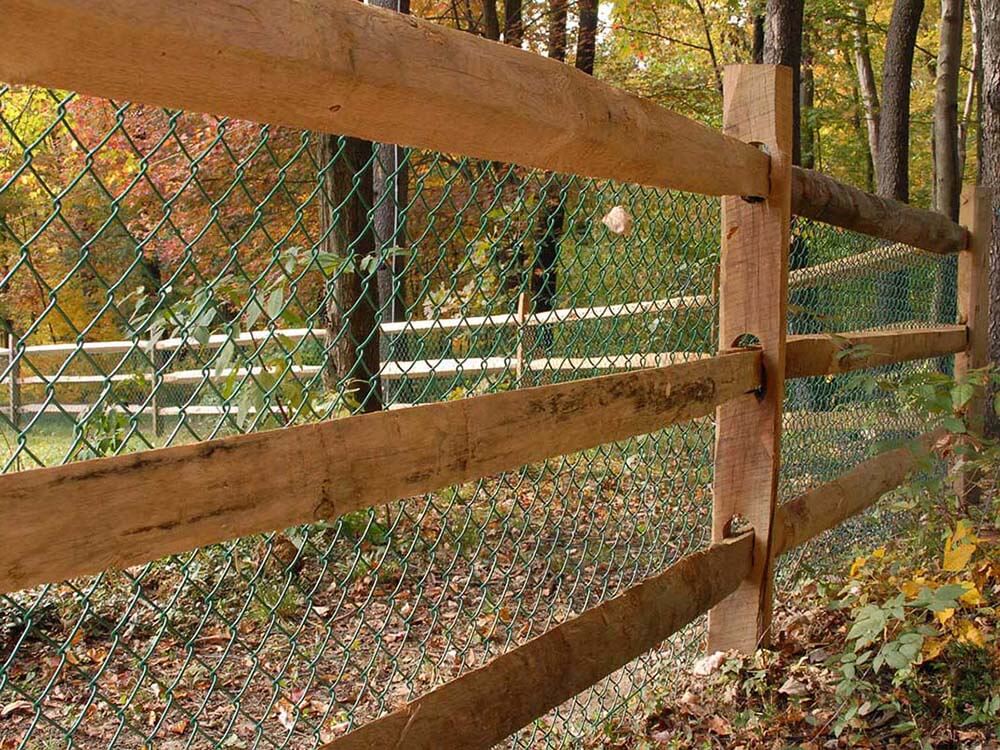
The Pennsylvania, Maryland, and Virginia Departments of Natural Resources all recommend an 8-foot deer fence as the most effective way to deter deer. The polyethylene mesh mounted on black metal posts must be at least 7 feet to work reliably. If zoning limits fence height to 6 feet, chain link fencing may also be used; however, deer can easily jump over fences shorter than six feet.
Electric Deer Fencing
Another alternative is a 5-foot high-tensile wire fence with an electrical charge, like the fence used in agriculture. This fence works well in larger yards and fields where no children play. A UL energizer charges the fence with 6,000 to 7,000 volts that slightly shocks the deer. In general, deer learn after three shocks to take another path. The electrical fence requires a five to 7-foot area to be cleared to prevent shorts. Since deer require three reinforcing shocks, it is best to bait the fence with apples or peanut butter to teach them early in the season to take an alternate path.
