


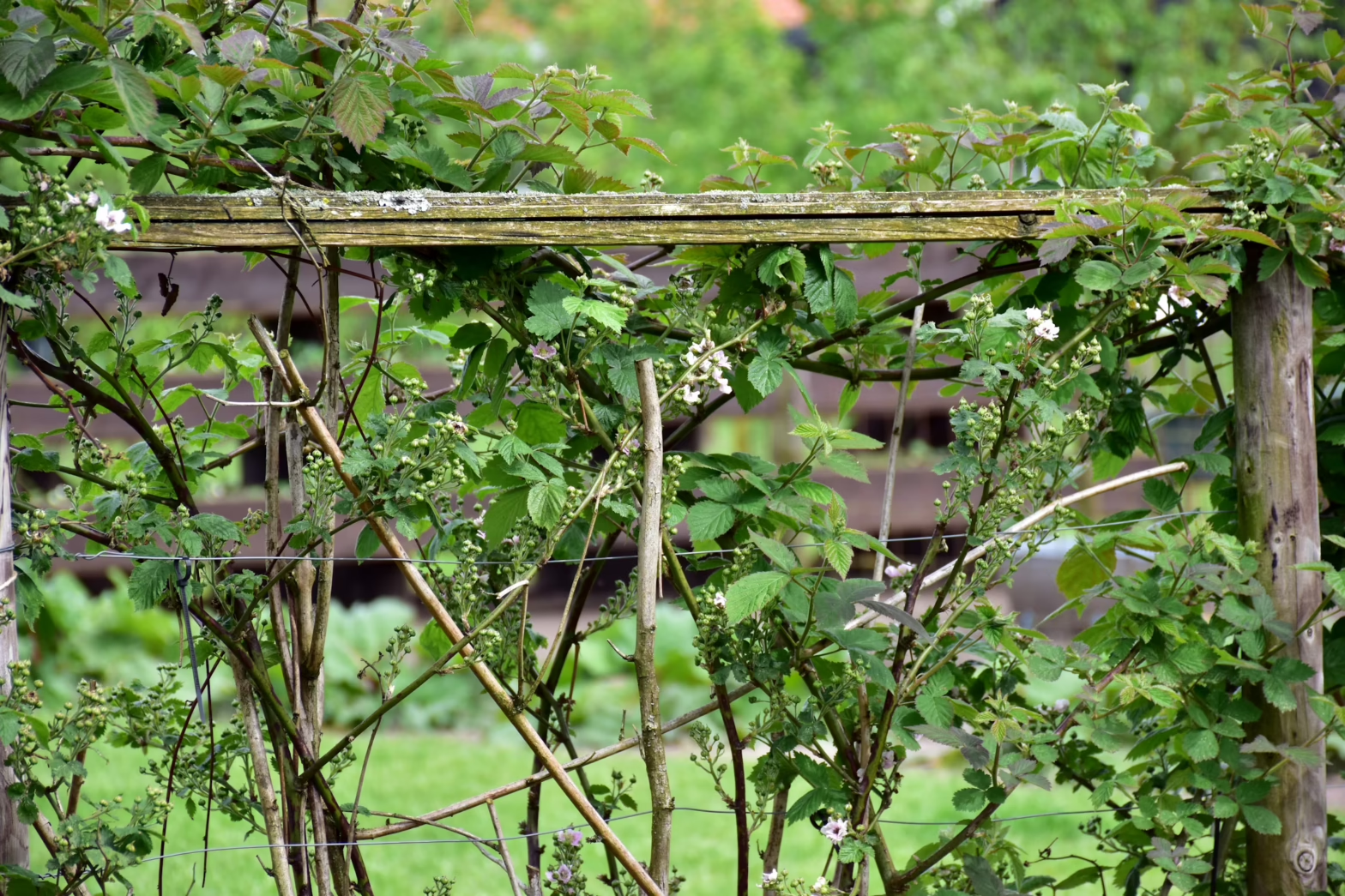
Once upon a time, the careful angles of a lattice and the playful curves of a vine met on a garden trellis. However, this attractive pair resulted in more than a mere source of outdoor decor. They created a practical and attractive screen that can hide unwanted sights from view or create privacy.
Trellises are excellent vertical gardening structures because they help expose a vine’s leaves to more sunlight. Some fruits and vegetables are actually most productive when supported by a trellis. Grapes, tomatoes, beans, cucumbers, peas, smaller varieties of gourds, squash, and pumpkins all benefit from vertical supports.
Most trellises are two-dimensional structures of one or more lattice patterns. Some stand alone, while others are attached to buildings. Since fences involve many of the same lattice patterns as trellis, fences should also be considered an excellent backdrop for many decorative and edible plants.
Trellis Under Deck
Properly chosen vines can dress up a plain fence like a chain link fence. A few things are helpful to know to have gardening success with a trellis and a fence.
How Vines Cling
Vines use different strategies to do their climbing. Some have tendrils, while others have coiling leaf stalks, twisting or twining stems, or weaving stems. Among roses, for instance, there are ramblers and twiners. The branches of ramblers grow in a weaving pattern in and out of the lattice. Climbing roses twine around the lattice. A few determined vines like Virginia creeper can cling to a solid vinyl fence with their natural adhesive “feet.” Some clinging vines, such as climbing hydrangea, have aerial roots that lightly penetrate porous surfaces like wood or brick.
These methods of clinging and climbing, plus the potential weight of a full-grown vine, create a range of choices you should consider before planting.
Criteria for Selecting Vines
Maintenance of the fence: You should base vine selections on the type of fence. Annual plants and herbaceous perennials die back to the ground every fall. If your trellis or fence is painted every few years, annuals such as morning glories or herbaceous perennials such as golden hops are good choices. After they die back, you’ll have months to paint, clean, or repair the structure.
Suppose the trellis or fence is natural weathered (unpainted) wood, chain link, or vinyl. It is a candidate for woody perennials such as hardy kiwi, climbing hydrangea, roses, grapes, and euonymous. All of these lose their leaves in the winter, but the trunks and stems persist. There are a few evergreen perennial vines, such as the shade-tolerant Persian ivy.
Height and spread of the vine: Think about the size of the mature vine before you plant. Annual vines such as sweet peas or climbing nasturtium grow to about 6’, while the perennial Virginia creeper can grow to 30’ long and 10’ wide.
Trellises add an excellent visual touch to all types of landscapes. With a few simple choices, you can create both privacy and beauty by covering them with vines. Since woody perennials may take a few years to cover a structure completely, try mixing annuals and perennials in the first few years. That will help create color and cover right from the start.
